In the world of nutrition, you’ve probably heard the terms macronutrients and micronutrients tossed around. But what exactly do they mean? And why is it essential to get enough of both? Let’s dive into the details and explore how these nutrients fuel your body and why a diverse diet is the key to optimal health.
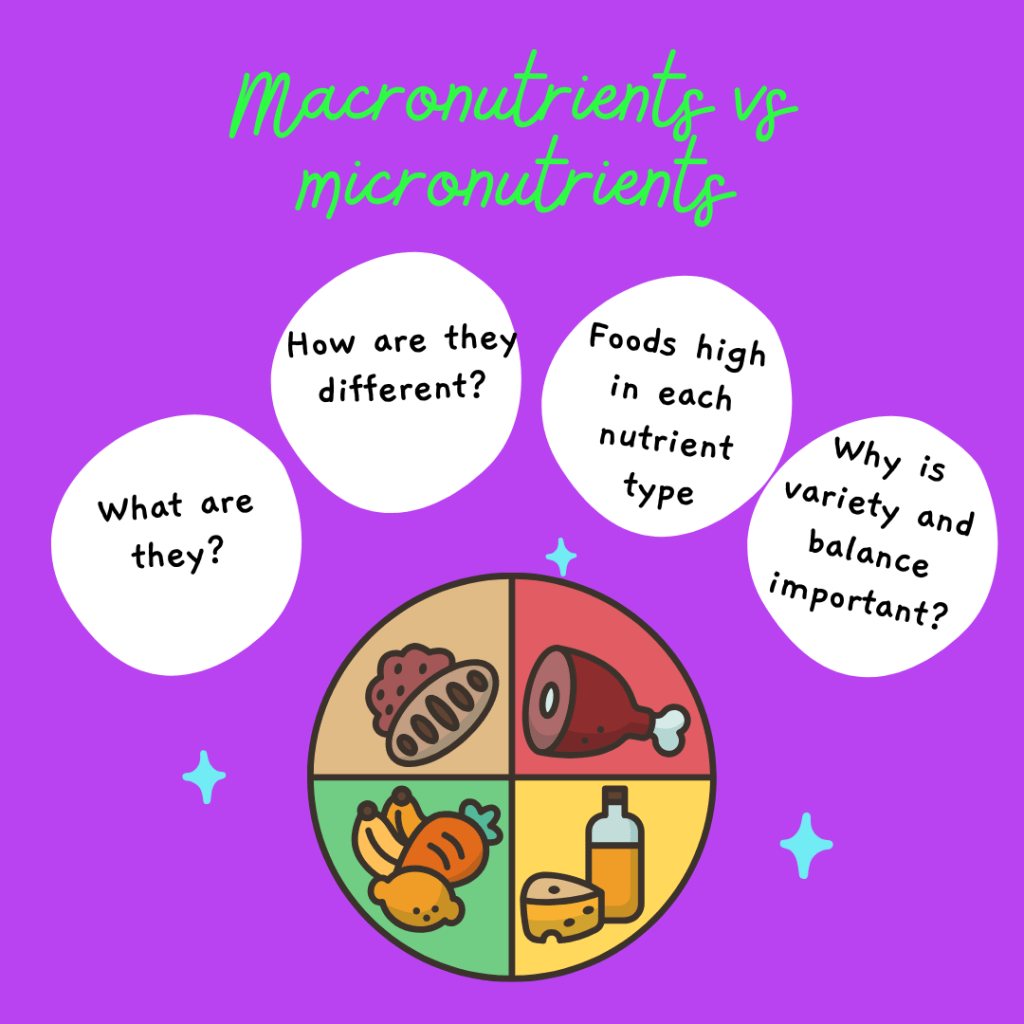
What Are Macronutrients?
Macronutrients are the nutrients your body needs in large amounts to provide energy and maintain essential functions. There are three primary macronutrients:
- Carbohydrates
- Role: Your body’s primary energy source. Carbs are broken down into glucose, which fuels your brain, muscles, and cells.
- Foods High in Carbohydrates: Whole grains (oats, quinoa, brown rice), fruits (bananas, apples), starchy vegetables (sweet potatoes, corn), and legumes (beans, lentils).
- Proteins
- Role: Proteins are the building blocks of your body. They help repair tissues, build muscle, and create enzymes and hormones.
- Foods High in Protein: Lean meats (chicken, turkey), fish (salmon, tuna), eggs, dairy products (Greek yogurt, cheese), tofu, and nuts.
- Fats
- Role: Fats provide long-term energy, help your body absorb fat-soluble vitamins (A, D, E, and K), and support brain health.
- Foods High in Healthy Fats: Avocados, nuts, seeds, olive oil, fatty fish (mackerel, sardines), and dark chocolate.
Why Are Macronutrients Important?
Macronutrients fuel your body and give you the energy you need to work, exercise, and live. A balanced intake ensures proper functioning of your organs, muscles, and immune system.
What Are Micronutrients?
Micronutrients are nutrients your body needs in smaller amounts, but they are no less important. These include vitamins and minerals, which play crucial roles in keeping your body healthy.
- Vitamins
- Role: Support immune function, energy production, and cellular repair.
- Examples and Food Sources:
- Vitamin C: Oranges, strawberries, and bell peppers.
- Vitamin D: Fatty fish, fortified milk, and sunlight exposure.
- Vitamin A: Sweet potatoes, carrots, and spinach.
- Minerals
- Role: Regulate hydration, strengthen bones, and support nerve and muscle function.
- Examples and Food Sources:
- Calcium: Dairy products, leafy greens, and fortified plant milk.
- Iron: Red meat, lentils, and tofu.
- Magnesium: Almonds, whole grains, and dark leafy greens.
Why Are Micronutrients Important?
Micronutrients are essential for preventing deficiencies that can lead to health issues. For example, a lack of vitamin D can cause bone weakness, while insufficient iron can lead to anemia.
Key Differences Between Macronutrients and Micronutrients
| Macronutrients | Micronutrients |
|---|---|
| Needed in large amounts. | Needed in small amounts. |
| Provide energy (calories). | Do not provide energy. |
| Examples: carbs, proteins, fats. | Examples: vitamins, minerals. |
| Found in most whole foods. | Often concentrated in fruits, vegetables, and fortified products. |
Why Variety in Your Diet Matters
Eating a wide variety of foods ensures you’re getting all the macronutrients and micronutrients your body needs. Here’s why diversity is crucial:
- Reduces Nutritional Gaps: Different foods offer different nutrients. For example, spinach is rich in iron, while oranges provide vitamin C. Eating a mix of foods prevents deficiencies.
- Promotes Gut Health: A varied diet supports a diverse gut microbiome, which is essential for digestion, immunity, and overall health.
- Prevents Boredom: Let’s face it—eating the same meals every day can get dull. Variety keeps your meals exciting and encourages you to stick to healthy habits.
- Boosts Antioxidant Intake: Different fruits and vegetables contain unique antioxidants that protect your body from inflammation and disease.
Simple Tips to Eat a Balanced and Varied Diet
- Eat the Rainbow: Aim to include fruits and vegetables of all colors in your meals.
- Mix Your Proteins: Incorporate plant-based options like beans and tofu alongside meat and fish.
- Experiment with Whole Grains: Try quinoa, farro, and barley instead of sticking to white rice or pasta.
- Switch Up Your Snacks: Rotate between nuts, seeds, fresh fruits, and yogurt to keep things fresh and nutritious.
The Takeaway
Macronutrients and micronutrients are both essential for your health, but they serve different purposes. While macronutrients provide the energy your body needs, micronutrients support the intricate systems that keep you functioning at your best. By eating a wide variety of foods, you ensure your body gets everything it needs to thrive.
Remember, wellness starts with what you put on your plate. Fuel your body with intention, and watch how your energy, mood, and overall health blossom.
Ready to take the next step in your wellness journey? Follow The Wellness Blossom for more tips, recipes, and inspiration to live your healthiest life! 🌸
 The Wellness Blossom
Leave a comment