Setting goals is a powerful way to drive personal and professional growth. Whether you’re aiming to improve your health, advance your career, or build stronger relationships, having a clear plan can make all the difference. But not all goals are created equal—some are vague and easily forgotten, while others are specific, motivating, and effective. In this post, we’ll explore why proper goal-setting is important, how to set SMART goals, and actionable tips to help you achieve success.
Why Goal-Setting Matters
Goal-setting provides a roadmap for your aspirations, making it easier to track progress and stay motivated. Here are some key reasons why setting goals is essential:
- Improved Focus: Goals help you prioritize what truly matters and avoid distractions.
- Increased Motivation: Working toward a meaningful objective keeps you driven, even on challenging days.
- Enhanced Productivity: Setting clear goals helps break down overwhelming tasks into manageable steps.
- Better Mental Health: According to research from the American Psychological Association, goal-setting can improve self-esteem and reduce stress, as it gives you a sense of control and purpose.
The SMART Framework for Goal-Setting
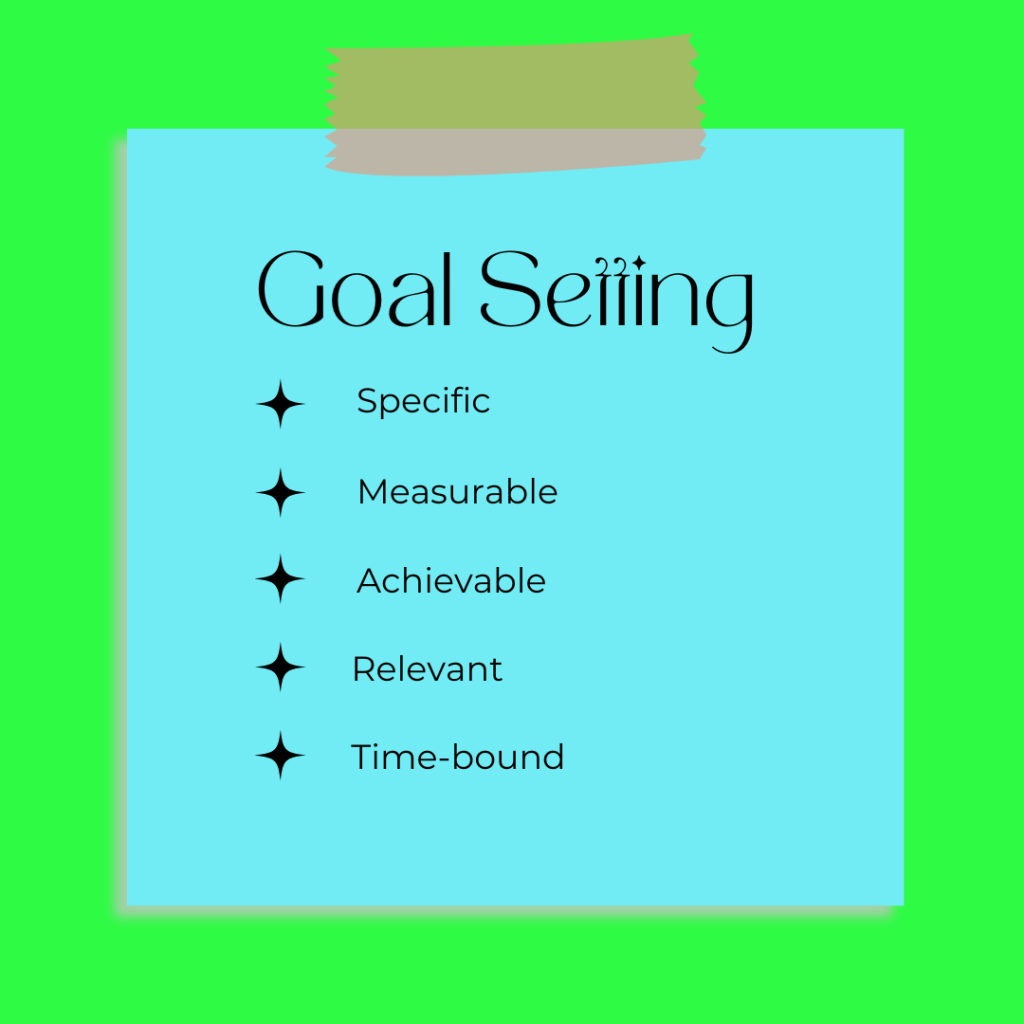
One of the most effective ways to set goals is by using the SMART framework. SMART goals are:
- Specific: Define exactly what you want to achieve. For example, instead of saying, “I want to exercise more,” try, “I want to work out for 30 minutes, 5 days a week.”
- Measurable: Include a way to track your progress. Numbers, dates, or milestones make your goal more tangible.
- Achievable: Set goals that are challenging yet realistic. If a goal feels impossible, you’re less likely to stick with it. I like to break down my larger goals into smaller ones to help keep me on track and allow me to achieve these smaller goals more frequently.
- Relevant: Make sure your goals align with your broader values and priorities.
- Time-bound: Give yourself a deadline to stay accountable. For instance, “I will lose 10 pounds by the end of this year.”
The Science of Goal-Setting: Fascinating Statistics
- People who write down their goals are 42% more likely to achieve them, according to a study by Dr. Gail Matthews, a psychology professor at Dominican University.
- 92% of New Year’s resolutions fail, often due to unrealistic or vague goals.
- Breaking larger goals into smaller tasks can improve completion rates by up to 30%, as reported in productivity studies.
These stats highlight the importance of setting clear, actionable, and realistic goals.
Tips for Getting Started with Goal-Setting
- Reflect on Your Values: Before setting goals, think about what truly matters to you. Align your goals with your personal values for greater satisfaction.
- Start Small: Begin with manageable goals to build confidence and momentum. For example, commit to drinking an extra glass of water each day before aiming for broader dietary changes.
- Visualize Success: Imagine how achieving your goal will feel and how it will positively impact your life. Visualization is a powerful motivator.
- Stay Flexible: Life is unpredictable, so be open to adjusting your goals as needed without feeling like you’ve failed.
- Celebrate Milestones: Reward yourself for small victories along the way. Positive reinforcement keeps you motivated and excited about your progress.
Common Mistakes to Avoid When Setting Goals
- Being Too Vague: Without specificity, goals lack direction.
- Setting Unrealistic Expectations: Overambitious goals can lead to burnout and discouragement.
- Ignoring Accountability: Share your goals with a friend or use a goal-tracking app to stay accountable.
- Skipping the ‘Why’: Without understanding why a goal matters to you, it’s easy to lose motivation.
Examples of SMART Goals
- Health: “I will run three miles, three times a week, and complete a 10K race by June.”
- Career: “I will complete an online certification in digital marketing within six months to enhance my skills and job prospects.”
- Personal Growth: “I will read one self-improvement book each month for the next year.”
Final Thoughts
Setting goals is about more than just writing down what you want to accomplish—it’s about creating a structured, actionable plan that aligns with your aspirations. By using the SMART framework and following the tips outlined in this post, you’ll be well on your way to turning your dreams into reality. Remember, progress takes time, but with consistent effort and the right mindset, anything is possible.
For more tips and inspiration on living your best life, stay connected with The Wellness Blossom! 🌸
 The Wellness Blossom
Leave a comment