If you’ve ever felt stiff, sore, or tight after a workout or long day, you’re not alone. Muscle tension and discomfort can affect anyone, whether you’re an athlete or someone with a sedentary lifestyle. One powerful and accessible solution is self-myofascial release (SMR)—a technique designed to relieve tension, improve mobility, and enhance overall muscle health.
In this blog post, we’ll explore what self-myofascial release is, how it works, the benefits it offers, and some effective techniques you can try at home.
What Is Self-Myofascial Release?
Self-myofascial release is a form of self-massage that targets the fascia, a connective tissue that surrounds and supports your muscles and organs. Over time, factors like repetitive movement, poor posture, or intense workouts can cause this tissue to tighten, leading to discomfort and restricted mobility.
SMR involves using tools like foam rollers, massage balls, or even your hands to apply pressure to specific areas of the body. This pressure helps release adhesions or “knots” in the fascia, restoring the tissue’s flexibility and promoting better muscle function.
How Does Self-Myofascial Release Work?
When you apply pressure to tight or sore areas, it stimulates mechanoreceptors in the fascia, triggering a relaxation response in the muscle. This process:
- Increases blood flow to the targeted area, aiding in recovery.
- Reduces muscle tension, improving flexibility and range of motion.
- Breaks down scar tissue or adhesions that may have formed over time.
SMR works similarly to traditional massage therapy but allows you to target specific areas on your own, making it a convenient and cost-effective option.
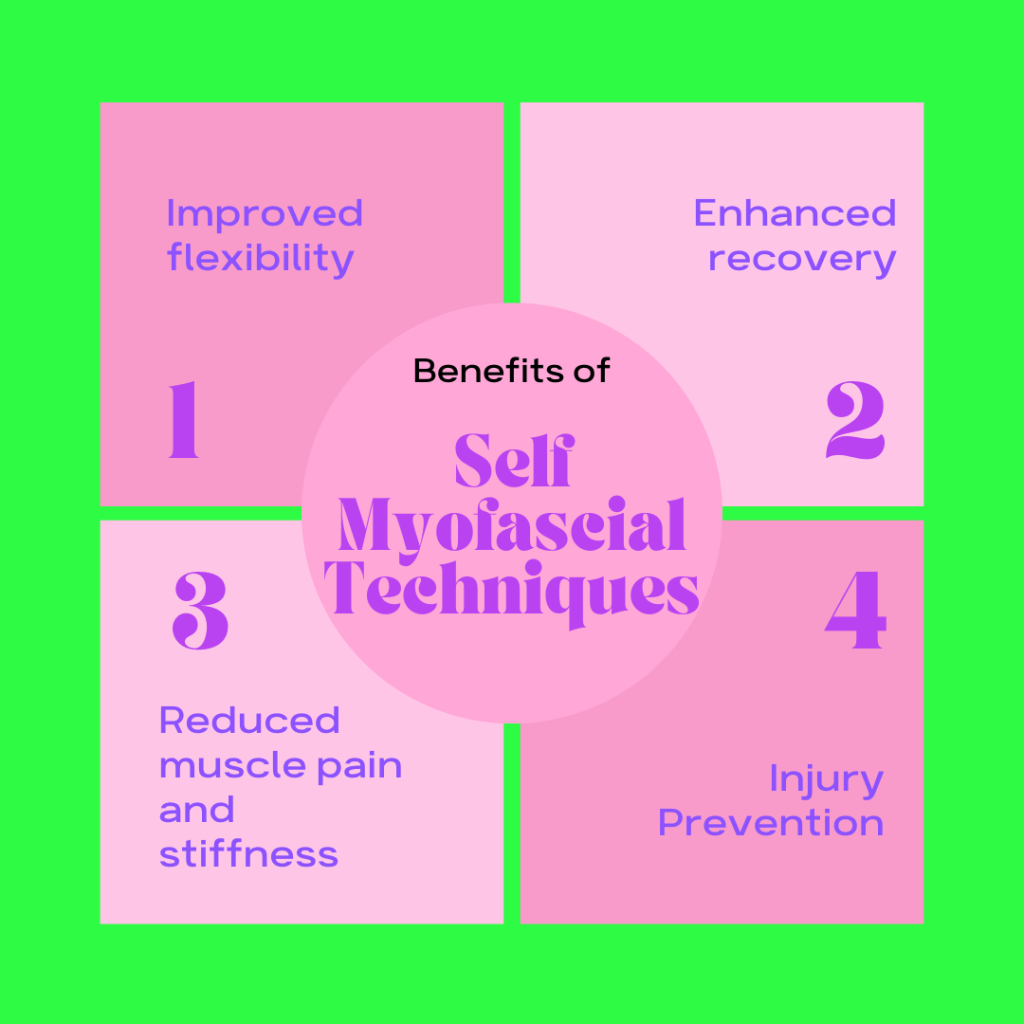
Benefits of Self-Myofascial Release
Practicing self-myofascial release regularly can lead to numerous physical and mental health benefits, including:
1. Improved Flexibility and Range of Motion
SMR helps loosen tight muscles and fascia, allowing for better mobility during workouts and daily activities.
2. Enhanced Recovery After Exercise
Using SMR as part of your post-workout routine can reduce soreness and speed up recovery, helping you stay consistent with your fitness goals.
3. Reduced Muscle Pain and Stiffness
Targeting trigger points can alleviate muscle discomfort caused by overuse, poor posture, or stress.
4. Better Posture
By releasing tension in key areas, SMR can improve your posture and alignment, reducing the risk of chronic pain.
5. Stress Relief
The act of massaging sore muscles can have a calming effect, reducing stress and promoting relaxation.
6. Injury Prevention
Maintaining healthy fascia and muscles through SMR can help prevent injuries by improving overall tissue health and movement patterns.
When to Avoid Self-Myofascial Release
While self-myofascial release (SMR) offers numerous benefits, there are certain situations where it may not be safe or advisable to use these techniques. Here are some scenarios when you should avoid or exercise caution with SMR:
1. Acute Injuries
- If you’ve recently experienced a muscle tear, sprain, or other acute injury, avoid SMR on the affected area. Applying pressure can worsen the injury or delay healing.
- Instead, focus on rest, ice, compression, and elevation (RICE) during the initial recovery period.
2. Inflamed or Swollen Areas
- Conditions like bursitis, tendinitis, or severe muscle inflammation are not suitable for SMR. Adding pressure to already inflamed tissues can increase discomfort and prolong the healing process.
3. Varicose Veins or Circulatory Issues
- Avoid rolling directly over varicose veins or areas with poor circulation, as the pressure could aggravate these conditions. Consult a healthcare provider for safer alternatives.
4. Bone-Related Conditions
- If you have osteoporosis or other bone-related conditions, avoid using SMR on bony areas, as excessive pressure could increase the risk of fractures.
5. Nerve Pain or Sciatica
- If you experience nerve-related pain, such as sciatica, applying direct pressure to the area may worsen symptoms. Instead, consult a physical therapist for targeted techniques that won’t aggravate the nerve.
6. Open Wounds or Skin Conditions
- Never use SMR on areas with open wounds, cuts, bruises, or skin infections. This could lead to irritation or infection.
7. During Pregnancy
- Pregnant individuals should consult their healthcare provider before practicing SMR, as certain techniques or pressure points may not be safe during pregnancy.
8. Chronic Pain or Medical Conditions
- If you have a chronic pain condition (e.g., fibromyalgia) or an underlying medical condition, it’s essential to consult with a healthcare professional to determine if SMR is suitable and how to perform it safely.
9. Over-Sensitivity
- If an area feels overly sensitive or painful during SMR, stop immediately. Pushing through pain can cause more harm than good.
General Tip: When in Doubt, Seek Professional Guidance
If you’re unsure whether SMR is appropriate for your situation, consult a physical therapist, chiropractor, or healthcare provider. They can guide you on proper techniques or recommend alternatives to address your specific needs safely.
Self-Myofascial Release Techniques to Try
Here are some common SMR techniques and the tools you’ll need:
1. Foam Rolling
Target Areas: Quads, hamstrings, calves, upper back
- Lie on a foam roller and roll back and forth slowly, focusing on sore or tight areas.
- Pause on tender spots and apply gentle pressure for 20-30 seconds.
2. Massage Ball Therapy
Target Areas: Feet, shoulders, glutes
- Place a small massage ball under the tight area and apply pressure by leaning into a wall or lying on the floor.
- Move the ball in small circles or hold it on trigger points for relief.
3. Rolling Pin or Stick Massage
Target Areas: Calves, shins, thighs
- Use a massage stick or rolling pin to roll over large muscle groups.
- Apply moderate pressure to avoid discomfort while still targeting tension.
4. Tennis Ball for the Back
Target Areas: Upper back, traps
- Place a tennis ball between your back and a wall, then roll it around to target knots and tightness.
- Avoid direct pressure on your spine.
5. Stretching With SMR
- Combine foam rolling with static stretching to maximize flexibility and relaxation.
Tips for Effective Self-Myofascial Release
- Start Slowly: Apply gentle pressure and gradually increase as your tolerance improves.
- Focus on Breathing: Deep breaths can help relax your muscles and enhance the release process.
- Avoid Overdoing It: Spend no more than 1-2 minutes on each area to prevent irritation.
- Stay Consistent: Incorporate SMR into your weekly routine for lasting benefits.
- Avoid Painful Areas: While slight discomfort is normal, stop if you feel sharp or intense pain.
Statistics on Self-Myofascial Release
- According to a study published in The Journal of Athletic Training, foam rolling can increase joint range of motion by up to 10% without negatively impacting strength.
- Research from Sports Medicine found that SMR can reduce delayed-onset muscle soreness (DOMS) by 20-30%, improving post-workout recovery.
- A 2020 review in Frontiers in Physiology highlighted that regular SMR sessions enhance flexibility and reduce the risk of muscle injuries.
When to Use Self-Myofascial Release
- Pre-Workout: To warm up muscles and improve mobility.
- Post-Workout: To reduce soreness and aid recovery.
- Anytime: If you feel tightness or tension in a specific area.
Final Thoughts
Self-myofascial release is a simple yet effective way to improve your muscle health, enhance recovery, and prevent injuries. Whether you’re a seasoned athlete or just looking to relieve everyday tension, SMR can be a game-changer for your fitness and wellness routine.
Ready to give it a try? Start small, stay consistent, and listen to your body as you explore this transformative practice.
For more wellness tips and techniques, follow The Wellness Blossom. Let’s blossom into better health together! 🌸
 The Wellness Blossom
Leave a comment