Sleep is not just a time to rest—it’s a cornerstone of good health. Quality sleep plays a vital role in everything from mental clarity and emotional resilience to physical health and longevity. Yet, according to the CDC, about one in three adults in the U.S. doesn’t get enough sleep. If you’re struggling to fall asleep, stay asleep, or wake up feeling refreshed, this guide will help you understand why sleep matters and how to improve its quality.
Why Sleep Quality Matters
- Supports Physical Health
- Sleep is when the body repairs tissues, strengthens the immune system, and balances hormones. Chronic sleep deprivation is linked to higher risks of heart disease, diabetes, obesity, and stroke.
- Boosts Mental Clarity and Productivity
- Sleep enhances memory, focus, and decision-making. Poor sleep, on the other hand, reduces cognitive performance, causing “brain fog” and decreased efficiency.
- Enhances Emotional Well-Being
- Poor sleep can negatively impact mood, increase irritability, and heighten the risk of anxiety and depression.
- Improves Longevity
- A study in the journal Sleep found that individuals who consistently sleep 7–8 hours per night tend to live longer than those who don’t.
Eye-Opening Sleep Statistics
- The National Sleep Foundation recommends 7–9 hours of sleep per night for adults, but 35% of adults get less than 7 hours regularly.
- Sleep deprivation causes an economic loss of $411 billion annually in the U.S., according to the RAND Corporation, due to reduced productivity and health issues.
- Poor sleep can impair reaction times as much as driving under the influence, highlighting its critical role in safety.
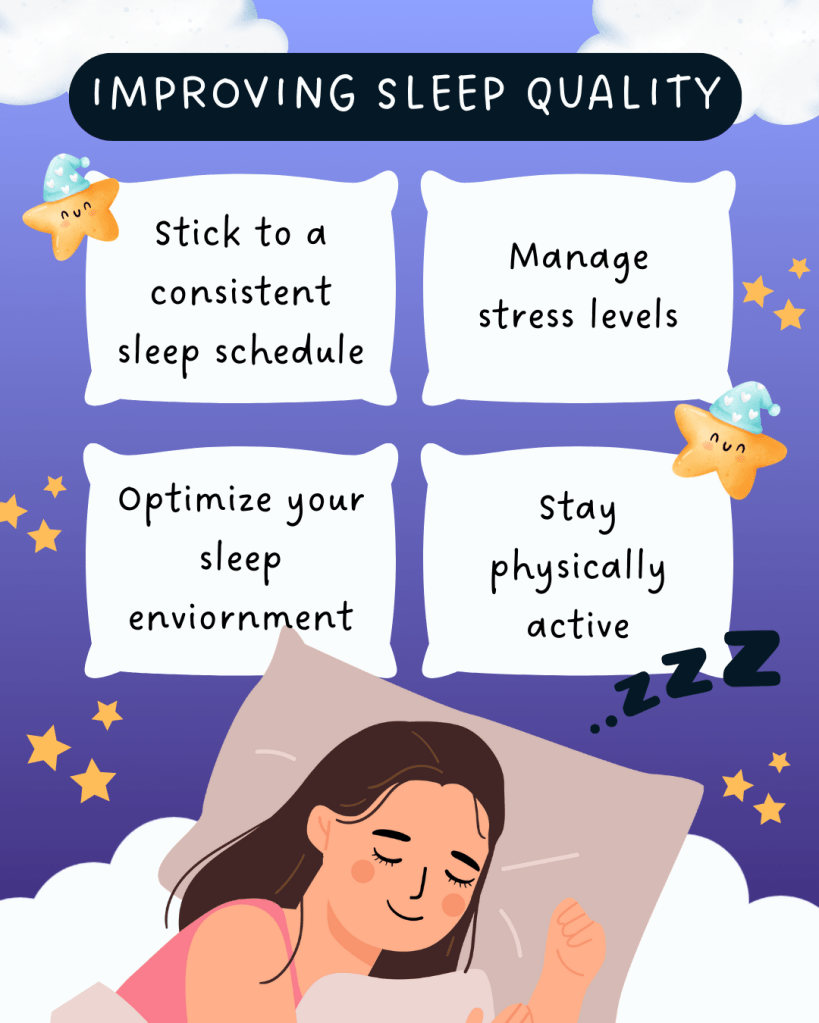
Tips for Improving Sleep Quality
1. Stick to a Sleep Schedule
- Go to bed and wake up at the same time every day, even on weekends. Consistency reinforces your body’s natural circadian rhythm, making it easier to fall asleep and wake up refreshed.
2. Create a Relaxing Bedtime Routine
- Establish pre-sleep rituals such as reading, meditating, or taking a warm bath to signal to your body that it’s time to unwind.
3. Optimize Your Sleep Environment
- Keep your bedroom dark, cool (around 65°F), and quiet. Invest in blackout curtains, white noise machines, or earplugs if needed.
4. Limit Exposure to Screens Before Bed
- The blue light emitted by phones, tablets, and computers interferes with melatonin production, making it harder to fall asleep. Turn off devices at least an hour before bedtime.
5. Watch Your Diet
- Avoid heavy meals, caffeine, and alcohol close to bedtime. Caffeine can stay in your system for up to 6 hours, disrupting your ability to fall asleep.
6. Stay Physically Active
- Regular exercise improves sleep quality by reducing stress and promoting relaxation. However, avoid vigorous workouts within 2–3 hours of bedtime.
7. Manage Stress Levels
- Chronic stress and anxiety can make it difficult to sleep. Incorporate stress-relief techniques like yoga, journaling, or breathing exercises into your daily routine.
8. Consider Your Mattress and Pillow
- Your sleep surface can make or break your rest. Choose a mattress and pillow that support your preferred sleep position and body type.
9. Limit Daytime Naps
- While a short nap (20–30 minutes) can boost energy, excessive daytime sleeping can interfere with nighttime rest.
10. Seek Professional Help if Necessary
- If you consistently struggle with sleep despite lifestyle changes, consult a healthcare professional. Conditions like sleep apnea or insomnia may require medical treatment.
Foods That Promote Better Sleep
Certain nutrients can encourage relaxation and improve sleep quality:
- Magnesium-Rich Foods: Spinach, almonds, and bananas.
- Tryptophan-Containing Foods: Turkey, eggs, and dairy.
- Melatonin-Rich Foods: Tart cherries, grapes, and kiwi.
Benefits of Prioritizing Sleep Quality
- Increased Energy and Productivity
- A good night’s sleep helps you start your day feeling energized and focused, ready to tackle tasks efficiently.
- Stronger Immune System
- Quality sleep improves the body’s ability to fight off infections and recover from illnesses.
- Better Emotional Regulation
- Sleep promotes emotional balance, making it easier to handle daily challenges and maintain healthy relationships.
- Enhanced Athletic Performance
- Sleep is critical for muscle repair, endurance, and overall physical performance, making it essential for athletes and fitness enthusiasts.
Final Thoughts
Improving your sleep quality isn’t just about feeling well-rested—it’s about investing in your long-term health and well-being. Small, consistent changes in your habits and environment can make a world of difference. Start by implementing one or two tips from this guide and gradually build a sleep-friendly lifestyle.
Your body and mind deserve the rejuvenating power of great sleep. For more wellness tips and strategies, follow The Wellness Blossom and blossom into the healthiest version of yourself! 🌸
Do you have a favorite sleep hack or a question about improving sleep? Share it in the comments or connect with us on social media!
 The Wellness Blossom
Leave a comment