Introduction
Aging is a natural process, but how we age can be greatly influenced by our lifestyle choices. Embracing healthy habits early in life can not only help you feel better today but also set the stage for an active, vibrant future. In this blog post, we’ll explore the key factors that contribute to healthy aging, including the importance of diet, physical activity, social connections, and mental well-being. By prioritizing these areas, you can ensure that you age gracefully and enjoy every stage of life to its fullest.
The Importance of Healthy Aging
Healthy aging isn’t just about looking young—it’s about maintaining your overall well-being, both physically and mentally. As we age, our bodies undergo natural changes, but by adopting positive lifestyle habits, we can slow down the aging process and reduce the risk of age-related diseases. Healthy aging also enhances longevity, boosts energy levels, and improves quality of life.
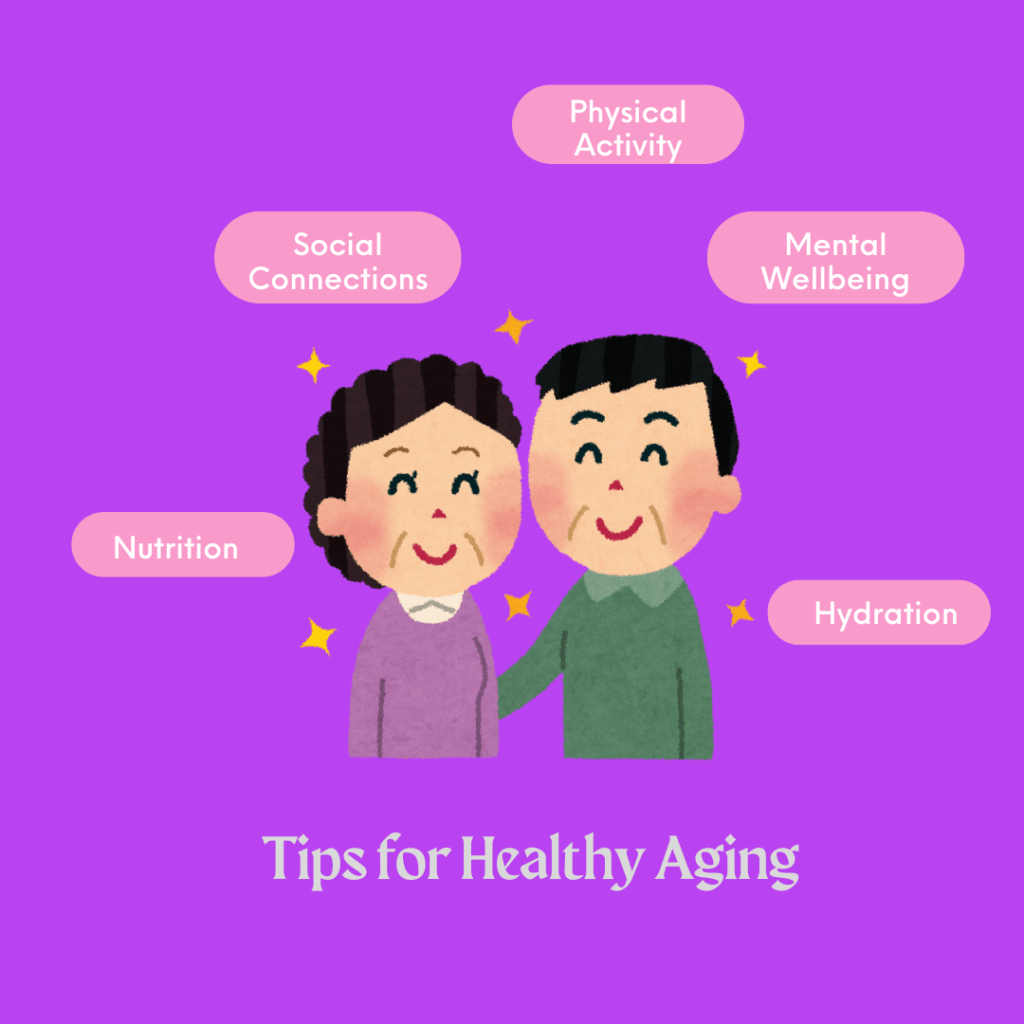
Key Factors for Healthy Aging
- Nutrition: Fueling Your Body for Longevity
A balanced diet is one of the most important pillars of healthy aging. The foods you eat play a significant role in maintaining your health, supporting your immune system, and preventing chronic diseases like heart disease, diabetes, and osteoporosis. As you age, your nutritional needs may change, so it’s essential to focus on nutrient-dense foods that provide essential vitamins, minerals, and antioxidants.
- Key Nutrients for Healthy Aging:
- Fiber: Helps maintain healthy digestion and prevent constipation. Foods like whole grains, fruits, and vegetables are great sources of fiber.
- Calcium and Vitamin D: Vital for maintaining strong bones and reducing the risk of fractures. Dairy products, leafy greens, and fortified plant-based milk are excellent sources.
- Antioxidants: Help fight oxidative stress and reduce inflammation, which can contribute to aging. Berries, leafy greens, nuts, and seeds are packed with antioxidants.
- Healthy Fats: Omega-3 fatty acids, found in fatty fish like salmon, walnuts, and flaxseeds, help reduce inflammation and support heart health.
- Physical Activity: Staying Active for a Stronger Body and Mind
Regular physical activity is crucial for healthy aging. It helps maintain mobility, improve heart health, boost energy levels, and keep muscles strong. Additionally, physical activity supports mental health by reducing stress, anxiety, and depression. Incorporating a variety of exercises, including strength training, cardio, and flexibility work, will help you stay balanced and functional as you age.
- Types of Exercise for Healthy Aging:
- Strength Training: Building muscle mass is essential for maintaining bone density and preventing falls. Aim for two or more strength training sessions per week, focusing on all major muscle groups.
- Cardio Exercise: Walking, swimming, cycling, or dancing can help improve cardiovascular health and stamina. Aim for at least 150 minutes of moderate-intensity aerobic activity per week.
- Flexibility and Balance: Yoga, Pilates, and tai chi are excellent practices for improving flexibility and balance, reducing the risk of falls, and promoting mental relaxation.
- Social Connections: The Power of Relationships
Building and maintaining strong social connections is key to healthy aging. Having a strong support system—whether through family, friends, or community groups—helps combat loneliness, reduces stress, and provides a sense of purpose. Social engagement has also been shown to improve cognitive function and promote emotional well-being.
- Tips for Building Social Connections:
- Join Clubs or Groups: Whether it’s a fitness class, a book club, or a volunteer organization, getting involved in activities can help you meet new people and foster meaningful relationships.
- Stay Connected with Loved Ones: Make time for regular phone calls or video chats with friends and family to nurture your relationships, even if they live far away.
- Volunteer: Volunteering can give you a sense of fulfillment and allow you to contribute to your community, all while forming social connections.
- Mental Well-being: Keeping Your Mind Sharp
Maintaining mental health is just as important as physical health for healthy aging. Keeping your mind sharp through lifelong learning, mental exercises, and stress management can help prevent cognitive decline and improve your overall quality of life. Chronic stress can accelerate aging, so finding ways to relax and unwind is essential.
- Tips for Mental Wellness:
- Stay Mentally Engaged: Read books, take up new hobbies, or solve puzzles to keep your brain active and improve cognitive function.
- Practice Mindfulness and Meditation: Regular mindfulness practices, such as deep breathing or meditation, can reduce stress and enhance emotional resilience.
- Sleep Well: Quality sleep is essential for mental clarity and emotional well-being. Aim for 7-9 hours of sleep each night and establish a calming bedtime routine.
- Hydration: The Key to Longevity
Staying hydrated is an often-overlooked aspect of healthy aging. As we age, our sense of thirst can diminish, making it easier to become dehydrated. Proper hydration supports cellular function, skin health, digestion, and energy levels.
- Tips for Staying Hydrated:
- Drink Water Regularly: Aim to drink at least 8 cups (64 ounces) of water daily, and increase your intake if you’re physically active or in hot weather.
- Eat Hydrating Foods: Include water-rich foods like fruits (e.g., watermelon, cucumbers) and vegetables in your diet to help meet your hydration needs.
Easy Tips for Healthy Aging
- Plan Your Meals: Take time to prepare balanced meals with nutrient-dense foods that support your health. Consider meal prepping to make healthy eating more convenient.
- Stay Active Daily: Aim for small but consistent activity, such as walking or stretching, throughout the day.
- Connect with Others: Make it a priority to nurture your social relationships by attending social events, joining groups, or simply checking in with loved ones regularly.
- Practice Stress-Reduction Techniques: Engage in activities that help manage stress, such as yoga, journaling, or spending time in nature.
Conclusion
Healthy aging is about more than just the number of candles on your birthday cake—it’s about maintaining your physical, mental, and emotional well-being as you grow older. By focusing on a nutritious diet, staying physically active, building social connections, and prioritizing mental wellness, you can ensure that each year brings greater vitality and happiness. Start incorporating these tips into your life today and embrace the benefits of aging well!
Want more wellness tips for living a healthier, longer life? Stay connected with The Wellness Blossom on Instagram for daily inspiration on how to live your best, healthiest life. 🌸
 The Wellness Blossom
Leave a comment