Introduction
Sleep is one of the most important yet often overlooked pillars of health. While many focus on diet and exercise to improve fitness and mental well-being, sleep is just as crucial for overall health. Quality sleep is essential for physical recovery, mental clarity, emotional balance, and stress management. In this blog post, we will explore why sleep is so important and how it directly relates to fitness, mental health, and stress management.
Why Sleep is Essential for Overall Health
Sleep is not just a period of rest; it is a vital process that allows the body and mind to restore, repair, and rejuvenate. During sleep, your body works hard to regulate hormones, repair muscle tissues, and strengthen immune function. This process is essential for maintaining health, energy levels, and overall well-being. Inadequate or poor-quality sleep can negatively impact your mood, cognitive function, fitness goals, and more.
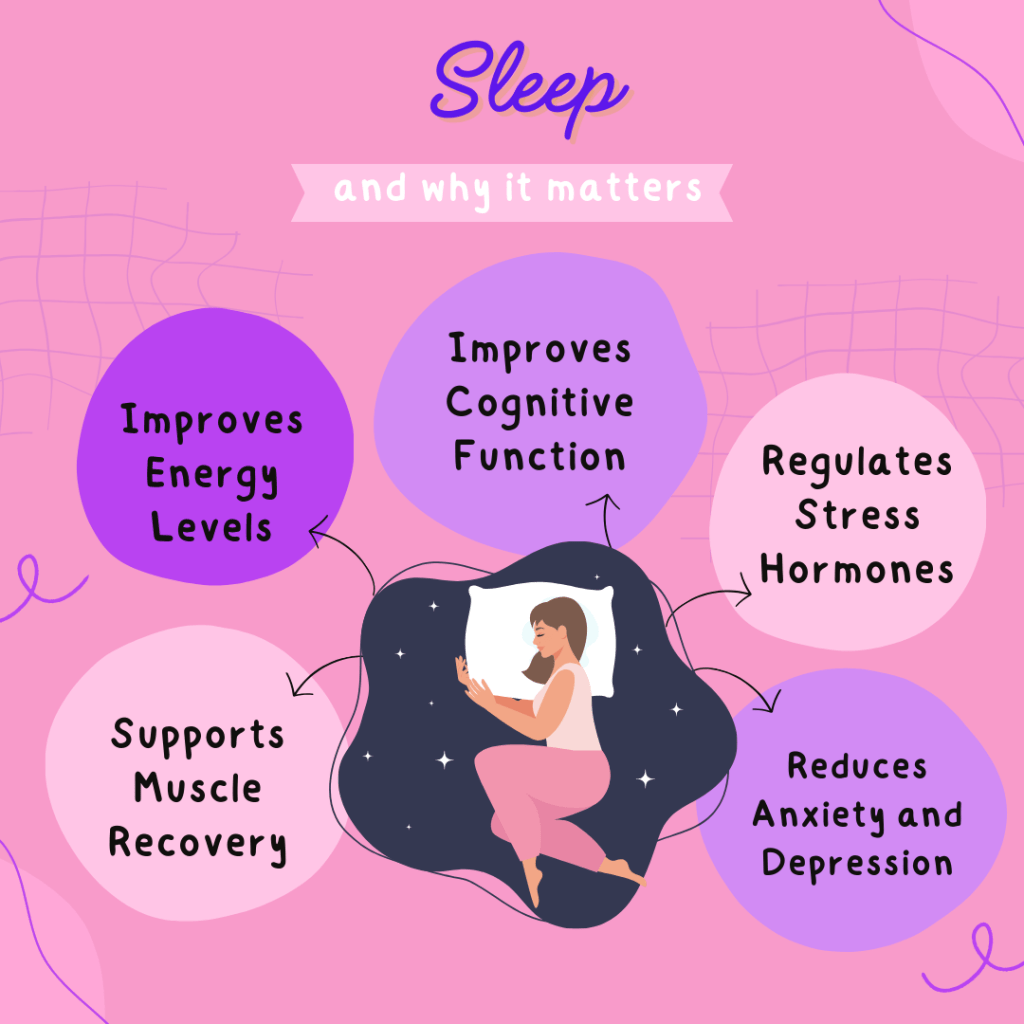
Sleep and Fitness: Recovery and Performance
When it comes to fitness, sleep is your secret weapon. A good night’s sleep is essential for muscle recovery, strength building, and overall physical performance. Here’s why:
- Muscle Recovery After intense exercise, your muscles experience micro-tears, and sleep is when they repair and grow stronger. Growth hormone, which plays a key role in muscle repair, is released in higher quantities during deep sleep. Without enough sleep, your muscles may not recover fully, potentially leading to fatigue, injury, and slower progress toward fitness goals.
- Energy and Performance Sleep directly affects your energy levels. Poor sleep results in lower energy, which can reduce your motivation and physical performance during workouts. A well-rested body can engage in more intense exercise, recover more efficiently, and perform at a higher level.
- Improved Endurance Studies have shown that athletes who prioritize sleep experience better endurance and stamina during training and competition. This is because sleep improves cardiovascular function, increases oxygen delivery to muscles, and enhances overall physical capacity.
Sleep and Mental Health: Emotional Balance and Cognitive Function
Sleep plays a significant role in regulating your mood, thoughts, and mental clarity. Lack of sleep is closely linked to mental health issues such as anxiety, depression, and mood swings. Here’s how:
- Emotional Stability When you don’t get enough sleep, the brain struggles to regulate emotions effectively. Sleep deprivation can make you more susceptible to irritability, stress, and feelings of frustration. On the other hand, quality sleep helps restore emotional balance and improves your ability to handle daily challenges.
- Cognitive Function Sleep is crucial for cognitive processes such as memory, learning, and decision-making. During deep sleep, your brain consolidates memories and processes information, helping you feel more alert and mentally sharp during the day. Lack of sleep, however, can impair focus, memory retention, and problem-solving skills.
- Reduced Anxiety and Depression Chronic sleep deprivation has been linked to an increased risk of developing anxiety and depression. Getting enough quality sleep can help regulate the brain’s emotional centers, improving mental health and resilience in the face of stress.
Sleep and Stress Management: Restoring Balance
In our fast-paced world, stress is a constant companion for many people. Sleep is one of the most powerful tools for managing stress and restoring balance. Here’s how sleep influences stress management:
- Regulating Stress Hormones When you’re stressed, your body releases cortisol, the stress hormone. Chronic stress leads to elevated cortisol levels, which can harm both your physical and mental health. Sleep helps regulate cortisol production, reducing the negative effects of stress and promoting a more balanced hormonal environment.
- Reducing Anxiety Sleep plays a critical role in helping the brain process and cope with stress. Adequate sleep improves your ability to manage anxiety by calming the nervous system, making you feel more relaxed and capable of handling challenging situations.
- Improved Mood Sleep helps replenish serotonin and other neurotransmitters, which are responsible for regulating mood. When you sleep well, you wake up feeling refreshed, more positive, and better equipped to face the day. This leads to improved stress resilience and emotional stability.
How Much Sleep Do You Need?
The amount of sleep needed varies depending on age, activity level, and individual needs, but general guidelines suggest:
- Adults (18-64 years): 7-9 hours of sleep per night
- Teenagers (14-17 years): 8-10 hours of sleep per night
- Children (6-13 years): 9-11 hours of sleep per night
It’s important to note that the quality of sleep matters just as much as the quantity. Ensuring your sleep is deep and restorative is key to maximizing the benefits of rest.
Tips for Improving Sleep Quality
To reap the full benefits of sleep, it’s essential to prioritize sleep hygiene. Here are some tips to improve your sleep quality:
- Establish a Consistent Sleep Schedule Going to bed and waking up at the same time every day, even on weekends, helps regulate your body’s internal clock, making it easier to fall asleep and wake up naturally.
- Create a Relaxing Bedtime Routine Engage in calming activities like reading, stretching, or meditating before bed to signal to your body that it’s time to wind down.
- Limit Screen Time The blue light emitted by phones, tablets, and computers can interfere with the production of melatonin, a hormone that helps regulate sleep. Try to avoid screens at least 30-60 minutes before bedtime.
- Optimize Your Sleep Environment Make your bedroom a sleep-friendly space by keeping it cool, dark, and quiet. Invest in a comfortable mattress and pillows to support restful sleep.
- Limit Caffeine and Alcohol Avoid consuming caffeine or alcohol close to bedtime, as they can interfere with your ability to fall asleep or stay asleep.
- Exercise Regularly Regular physical activity can help you fall asleep faster and improve the quality of your sleep. Just be sure to finish intense workouts a few hours before bedtime to avoid being too energized to sleep.
Conclusion
Sleep is an essential foundation for physical fitness, mental health, and stress management. Prioritizing sleep helps your body recover, your mind stay sharp, and your emotions remain balanced. By improving your sleep habits and ensuring you get adequate rest, you’ll notice improvements in your overall well-being, including enhanced fitness performance, mental clarity, and stress resilience. Make sleep a priority, and experience the positive impacts it has on your life.
Stay tuned to The Wellness Blossom for more tips on how to optimize your health and well-being! 🌸
 The Wellness Blossom
Leave a comment