Introduction
In today’s fast-paced world, it’s easy to forget how important regular movement is for overall health. We spend hours sitting at desks, commuting, or relaxing in front of screens, which can negatively affect our physical and mental well-being. One simple and effective way to improve your health is by walking. Specifically, setting a goal of walking 10,000 steps a day has become a popular target for fitness enthusiasts and health experts alike. But why 10,000 steps? What benefits does it provide? And how can you incorporate more walking into your day-to-day life? Keep reading to find out!
Why 10,000 Steps? Understanding the Goal
The 10,000-steps-a-day goal has gained worldwide popularity, but it’s important to know how this number came about. The goal was popularized in Japan in the 1960s by Dr. Yoshiro Hatano, a Japanese researcher who found that walking 10,000 steps a day could improve cardiovascular health. The number is not a magical threshold, but it’s a simple and achievable goal that helps many people increase their physical activity levels and reap the health benefits of regular movement.
While 10,000 steps may not be necessary for everyone, it serves as a great benchmark for overall fitness. For some people, the goal might be too ambitious, while for others, it may be a reasonable and achievable target to strive for. No matter where you fall on the activity spectrum, the key is consistency and gradually increasing your steps over time.
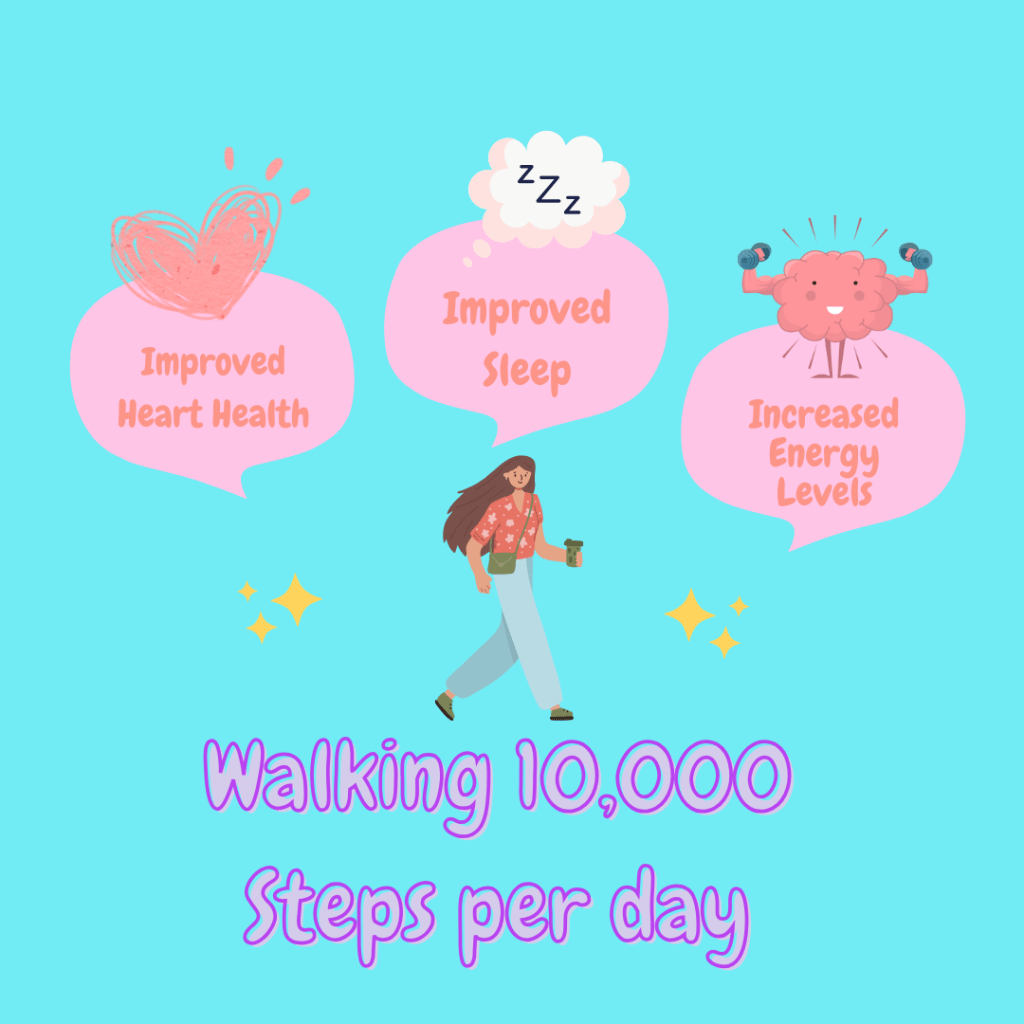
Health Benefits of Walking 10,000 Steps a Day
Walking is a low-impact, accessible exercise that offers a wide range of physical, mental, and emotional health benefits. Here are some of the reasons why hitting 10,000 steps each day can improve your health:
- Improved Cardiovascular Health Walking is a great way to keep your heart healthy. Regular walking helps improve circulation, lower blood pressure, and reduce the risk of heart disease. Studies have shown that walking for at least 30 minutes a day can help reduce the risk of stroke and other cardiovascular conditions.
- Weight Management and Fat Loss Walking is a great way to burn calories and support weight loss. When combined with a balanced diet, walking 10,000 steps can help boost metabolism and contribute to fat burning. While it may not be as intense as running or cycling, it’s a sustainable way to stay active and maintain a healthy weight over time.
- Improved Mental Health Walking has been shown to have positive effects on mental health. Physical activity, especially walking, stimulates the production of endorphins – the body’s natural mood boosters. This can help reduce symptoms of anxiety, depression, and stress. Furthermore, walking outdoors in nature can improve mental clarity and foster a sense of peace and calm.
- Enhanced Muscle and Joint Health Walking helps to strengthen muscles, particularly those in the lower body. It also helps keep your joints lubricated, which can reduce the risk of arthritis and joint stiffness. Walking regularly can also help with better posture, improved balance, and increased flexibility.
- Better Sleep Engaging in regular physical activity like walking can improve the quality of your sleep. It helps regulate your circadian rhythm, allowing you to fall asleep faster and experience deeper sleep. Just make sure not to walk too late at night, as it may leave you too energized for bed.
- Increased Energy Levels While it may seem counterintuitive, walking can actually give you more energy. When you walk, your blood circulation improves, delivering more oxygen to your muscles and tissues, which helps to fight fatigue. A short walk can help you feel refreshed and rejuvenated, especially during the afternoon slump.
Tips for Incorporating More Walking into Your Day
Reaching 10,000 steps a day doesn’t have to mean long, exhausting walks. Here are some tips for adding more walking into your daily routine:
- Track Your Steps Use a fitness tracker, smartwatch, or mobile app to keep track of your daily steps. Setting a daily step goal on your device can help keep you motivated and accountable as you work towards reaching 10,000 steps.
- Take the Stairs Ditch the elevator and take the stairs whenever possible. This simple change can add a significant number of steps to your daily total while also boosting your heart rate and strengthening your leg muscles.
- Walk During Breaks Use your work breaks to walk around the office, go for a walk outside, or take a quick stroll during lunch. Even a 10-minute walk every hour adds up throughout the day and helps you reach your goal.
- Park Farther Away Whether you’re heading to work, the grocery store, or a restaurant, try parking farther from the entrance. This gives you a few extra steps and helps you squeeze in more movement throughout your day.
- Walk with a Friend or Pet Walking with a friend, family member, or pet can make the activity more enjoyable and less of a chore. Whether it’s a morning walk with your dog or an afternoon stroll with a friend, it’s a great way to fit in more steps while also socializing.
- Take Walking Meetings If you work in an office or remotely, try to incorporate walking meetings. This is especially useful if you need to brainstorm or have a casual conversation. Walk around your office or outside for a more engaging and healthy meeting.
- Explore New Routes Keep things interesting by exploring different walking routes. Whether it’s a nearby park, nature trail, or urban walking path, variety can keep you motivated and help prevent monotony.
Final Thoughts
Walking 10,000 steps a day may seem like a lot, but it’s a simple and achievable goal that can transform your health and well-being. The benefits of walking are undeniable—improved cardiovascular health, weight management, mental health, and stress reduction are just a few of the many reasons why you should make walking a priority in your routine.
Start by setting small, realistic goals and gradually increase your steps over time. The key is consistency, so make walking a part of your daily lifestyle, and you’ll enjoy the health benefits that come with it. 🌸
 The Wellness Blossom
Leave a comment