Failure is often seen as something negative, something to be avoided at all costs. But what if failure is actually one of the most important stepping stones to success? Many of the world’s greatest minds and achievers have faced setbacks, and research shows that failure is not just inevitable but essential for growth.
Why Failure Is Necessary for Growth
- Failure Builds Resilience
Studies show that experiencing failure helps develop psychological resilience. A 2017 study published in the journal Nature Communications found that individuals who face moderate adversity perform better under stress than those who experience no failure at all. Facing failure teaches us how to navigate challenges and develop a tougher mindset, making future setbacks easier to handle. - Failure Provides Valuable Lessons
Every failure is an opportunity to learn what works and what doesn’t. Thomas Edison famously failed over 1,000 times before inventing the lightbulb, emphasizing that each failure brought him one step closer to success. When we fail, we gain insights that can refine our strategies and lead us in the right direction. - Failure Encourages Innovation
Many breakthroughs in business, science, and technology have come from failure. According to a study from Harvard Business School, companies that embrace a culture of learning from failure tend to be more innovative and successful in the long run. Some of the world’s most renowned companies, such as Google and Amazon, have experienced major failures before pivoting to create successful products. - Failure Develops Character
Facing failure teaches humility, patience, and perseverance. It forces us to confront our weaknesses and grow stronger in the process. Failure pushes us out of our comfort zones, helping us develop qualities such as adaptability and emotional intelligence. Over time, this strengthens our character and equips us with the skills needed to handle adversity. - Failure Creates Opportunities
Sometimes, failure leads us to paths we never expected. Many successful entrepreneurs started ventures that didn’t work out before discovering their true calling. J.K. Rowling, for example, faced multiple rejections before Harry Potter became a worldwide phenomenon. When one door closes, another opens—failure often redirects us to something even better.
The Psychological Impact of Failure
While failure can be beneficial, it can also take an emotional toll. It’s natural to feel discouraged or doubt yourself after a setback. According to the American Psychological Association, repeated failures can lead to stress and anxiety if not managed properly. However, the key lies in how we interpret failure. When we see it as a learning experience rather than a personal flaw, we can harness its power for growth rather than let it hold us back.
Overcoming Failure: Practical Steps
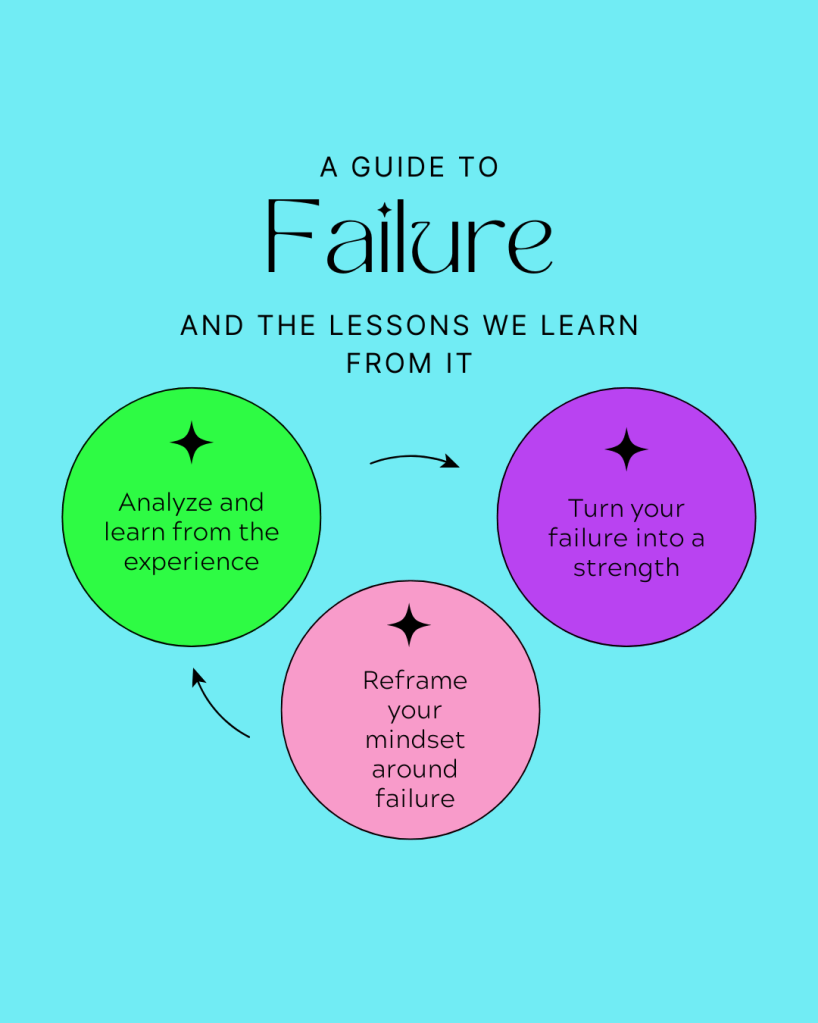
- Reframe Your Mindset
Instead of seeing failure as the end, view it as a learning experience. Adopt a growth mindset, as defined by psychologist Carol Dweck, which encourages seeing challenges as opportunities for improvement. A person with a growth mindset believes abilities can be developed through effort and learning rather than being fixed traits. - Analyze and Learn
Take time to reflect on what went wrong. What factors contributed to the failure? What can you do differently next time? Keep a journal to track your lessons and growth. Self-reflection helps prevent repeating the same mistakes and provides clarity for future attempts. - Seek Support and Guidance
Talk to mentors, friends, or support groups. Surrounding yourself with people who have overcome setbacks can provide encouragement and practical advice. Many successful individuals have experienced failure, and hearing their stories can help you stay motivated. - Take Small Steps Forward
Failure can be discouraging, but the key is to keep moving. Start with small, achievable goals to rebuild confidence and momentum. Breaking down your goals into smaller steps makes progress feel more manageable and prevents overwhelm. - Embrace a Long-Term Perspective
Remember that failure is just a temporary setback. Many of today’s most successful entrepreneurs, athletes, and artists faced repeated failures before achieving greatness. Oprah Winfrey was fired from her first television job, and Walt Disney was told he “lacked imagination.” Their long-term vision kept them going despite early failures. - Practice Self-Compassion
Failure can sometimes make us our own worst critics. Instead of harsh self-judgment, practice self-compassion. Treat yourself with the same kindness and understanding you would offer a friend in a similar situation. Studies have shown that self-compassion leads to greater resilience and a more positive outlook on setbacks. - Turn Failure into a Strength
Instead of letting failure define you, use it to your advantage. Keep a ‘Failure Resume’—a list of past failures alongside the lessons you learned from them. This exercise, popularized by Stanford professor Tina Seelig, helps shift your perspective and allows you to see failures as stepping stones rather than roadblocks.
Success Stories: Famous People Who Failed First
- Michael Jordan: Cut from his high school basketball team but went on to become one of the greatest athletes of all time.
- Steve Jobs: Fired from Apple, the company he co-founded, only to return later and revolutionize technology.
- Albert Einstein: Struggled in school but later changed the world with his theories in physics.
- Sara Blakely: Founder of Spanx, who was rejected by manufacturers multiple times before her brand became a billion-dollar business.
Final Thoughts
Failure is not something to fear—it’s a necessary part of growth and success. By changing how we view failure and developing strategies to learn from it, we can use it as a powerful tool for personal and professional development. The next time you face a setback, remind yourself: failure is just a stepping stone on the path to greatness.
Success is not about avoiding failure but about learning how to rise after falling. Are you ready to embrace failure as part of your journey? Start today, and watch yourself grow stronger than ever before!
 The Wellness Blossom
Leave a comment