We’ve all experienced moments of self-doubt—the little voice inside that criticizes, judges, and convinces us we’re not good enough. This inner dialogue, known as negative self-talk, can be incredibly damaging, affecting not just our mental health but also our physical well-being and overall quality of life. But the good news? You have the power to change that narrative.
In this blog post, we’ll explore what negative self-talk is, how it impacts your health, and practical tips to overcome it. Plus, we’ll share insights from psychological studies and wellness experts to help you cultivate a more positive, empowering mindset.
What Is Negative Self-Talk?
Negative self-talk refers to the internal dialogue that focuses on self-criticism, doubt, and pessimism. It can manifest in various forms, including:
- Personalizing: Blaming yourself for things that aren’t your fault.
- Filtering: Focusing only on the negative aspects of a situation, ignoring any positives.
- Catastrophizing: Expecting the worst possible outcome in any situation.
- Polarizing: Seeing things in black-and-white terms—either you’re perfect, or you’ve failed.
While occasional self-reflection is normal, persistent negative self-talk can significantly impact your mental health and self-esteem.
The Impact of Negative Self-Talk on Health
Negative self-talk doesn’t just stay in your head—it affects your entire well-being. Studies have shown that a negative mindset can lead to increased stress, anxiety, and even physical health issues.
According to the Mayo Clinic, persistent negative self-talk is linked to:
- Higher stress levels: Chronic stress can weaken the immune system and increase the risk of heart disease.
- Increased risk of depression and anxiety: Negative thoughts can create a cycle of hopelessness, leading to mental health struggles.
- Lower self-esteem and confidence: When you constantly criticize yourself, it’s hard to feel capable or worthy.
- Poor coping skills: Negative self-talk can make it difficult to handle challenges, leading to avoidance behaviors or unhealthy coping mechanisms.
On the flip side, positive self-talk can boost resilience, reduce stress, and even improve physical health outcomes.
How to Recognize Negative Self-Talk
The first step in overcoming negative self-talk is recognizing when it happens. Often, these thoughts become so automatic that we don’t even realize we’re engaging in them. Here are some signs to look out for:
- You often say things like “I can’t,” “I’m not good enough,” or “I always mess up.”
- You focus on your flaws and mistakes rather than your strengths and successes.
- You avoid trying new things because you’re afraid of failing.
- You compare yourself to others and feel like you don’t measure up.
7 Practical Tips to Overcome Negative Self-Talk
1. Practice Self-Awareness
Start by tuning into your thoughts. When you notice negative self-talk creeping in, pause and ask yourself: Is this thought true? Is it helpful? Sometimes, simply becoming aware of your inner critic can weaken its power.
Tip: Keep a journal where you write down negative thoughts as they arise. This can help you identify patterns and triggers.
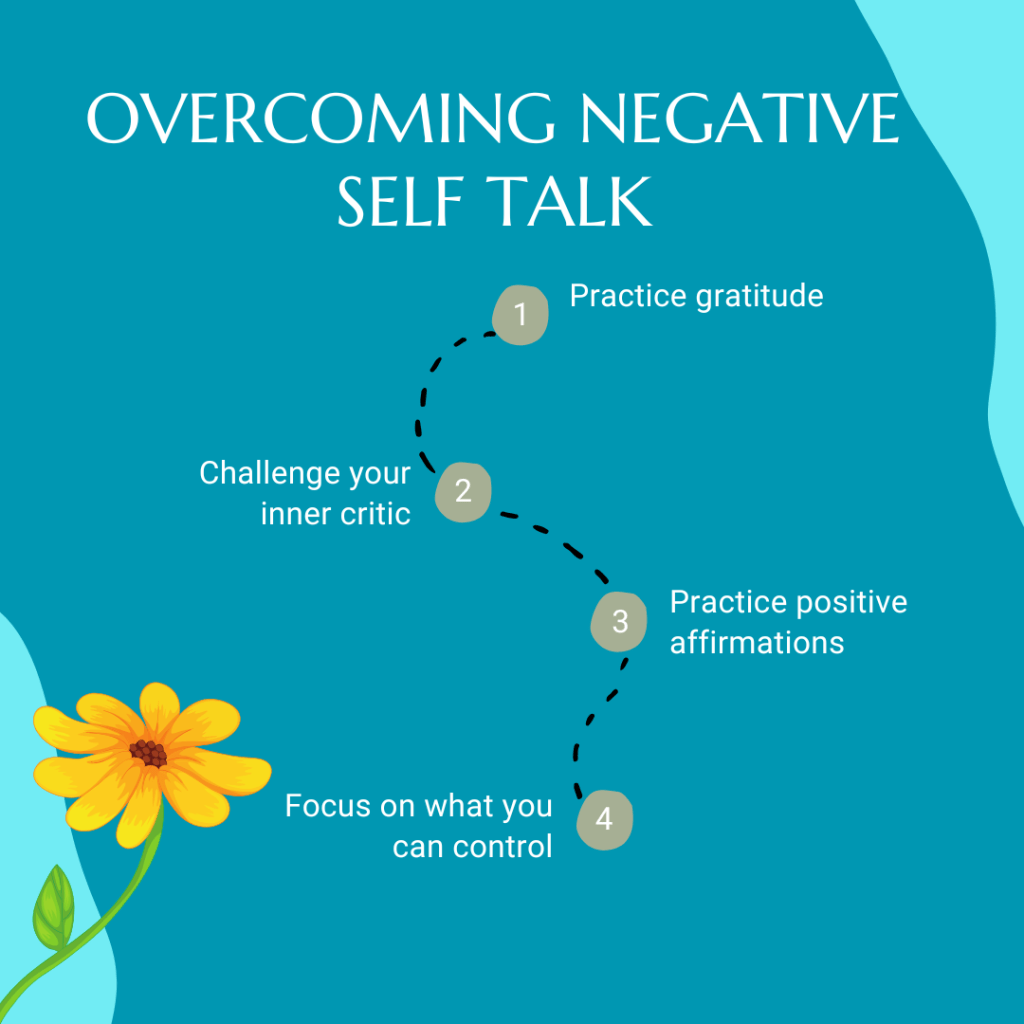
2. Challenge Your Inner Critic
Once you’ve identified negative thoughts, challenge them with evidence. For example, if you think, “I always fail at everything,” ask yourself: Is that really true? What are some things I’ve succeeded at?
Reframe it: Instead of saying, “I’m terrible at public speaking,” try, “Public speaking makes me nervous, but I’m working on improving.”
3. Practice Positive Affirmations
Positive affirmations are simple, empowering statements that can help rewire your brain for optimism. Repeating affirmations regularly can shift your mindset from self-criticism to self-compassion.
Examples of Positive Affirmations:
- “I am capable and strong.”
- “I am worthy of love and respect.”
- “I believe in myself and my abilities.”
4. Surround Yourself with Positivity
The people and environments you spend time with can influence your mindset. Surround yourself with supportive friends, uplifting media, and environments that encourage growth.
Tip: Follow social media accounts that promote positivity, self-love, and personal growth, and limit exposure to negative influences.
5. Practice Gratitude
Gratitude is a powerful tool for shifting focus from what’s wrong to what’s going well. By regularly acknowledging the good in your life, you can reduce the tendency to dwell on negative thoughts.
Try This: Each day, write down three things you’re grateful for. Over time, this simple practice can help reframe your mindset toward positivity.
6. Embrace Self-Compassion
Instead of beating yourself up for mistakes, treat yourself with the same kindness and understanding you’d offer a friend. Remember, everyone makes mistakes—it’s part of being human.
Tip: When you catch yourself engaging in negative self-talk, pause and ask, “What would I say to a friend in this situation?” Then, offer yourself the same compassion.
7. Focus on What You Can Control
Negative self-talk often stems from feeling out of control. By focusing on actionable steps you can take, you empower yourself to move forward.
Example: Instead of thinking, “I’ll never get fit,” reframe it as, “I can start by taking small steps today, like going for a walk or drinking more water.”
The Science Behind Positive Thinking
Research supports the power of positive thinking. A study published in the Journal of Behavioral Medicine found that individuals who engaged in positive self-talk experienced lower stress levels and improved problem-solving abilities. Similarly, a study from the University of Pennsylvania showed that people who practiced optimism had a 50% lower risk of cardiovascular disease.
Positive self-talk isn’t just “feel-good” advice—it has real, measurable effects on your health and well-being.
Final Thoughts: Your Mindset Matters
Overcoming negative self-talk isn’t about ignoring challenges or pretending everything is perfect. It’s about recognizing that you have the power to change your inner dialogue and cultivate a mindset that supports your growth and well-being.
By practicing self-awareness, challenging negative thoughts, and embracing positivity, you can transform the way you see yourself and the world around you. Remember, you are capable, worthy, and enough—just as you are.
Do you struggle with negative self-talk? What strategies have helped you overcome it? Share your thoughts in the comments below, and let’s inspire each other on the journey to wellness!
 The Wellness Blossom
Leave a comment