If you’ve ever walked into a grocery store with the intention of buying healthy foods, only to leave with a cart full of processed snacks and sugary treats, you’re not alone. Navigating the aisles and making nutritious choices can feel overwhelming, especially with clever marketing and countless options vying for your attention. But with a little preparation and a few smart strategies, grocery shopping for healthy foods can become simple, efficient, and even enjoyable.
At The Wellness Blossom, we believe that healthy living starts in your kitchen, and that begins with mindful grocery shopping. In this guide, we’ll share practical tips to help you fill your cart with nourishing foods, avoid common pitfalls, and make choices that support your health goals. Ready to transform your grocery habits? Let’s dive in!
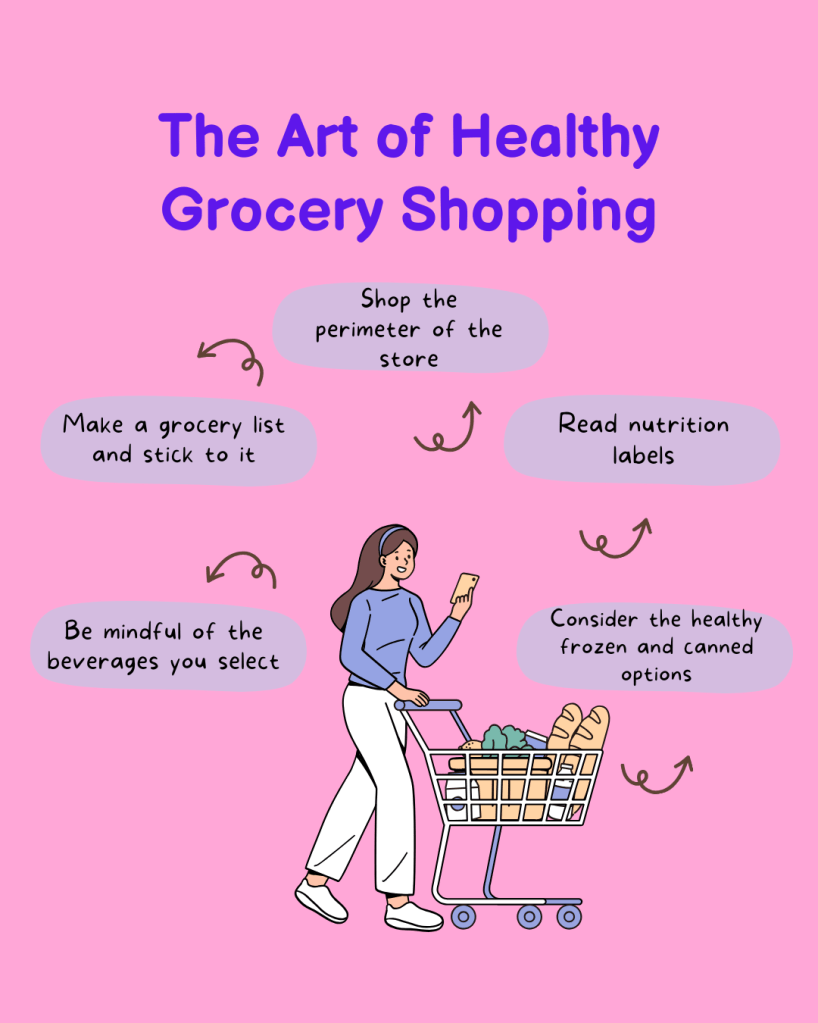
1. Start with a Plan: Make a Grocery List
One of the most effective ways to ensure you buy healthy foods is to plan ahead. Going to the store without a list can lead to impulse buys and forgotten essentials.
- Meal Planning: Start by planning your meals for the week. This helps you focus on buying only what you need, reducing food waste and saving money. Include breakfasts, lunches, dinners, and snacks in your plan.
- Categorize Your List: Organize your list by sections (produce, dairy, grains, etc.) to streamline your shopping and avoid wandering into aisles filled with processed foods.
Pro Tip: Use apps like MyFitnessPal or Mealime to plan healthy meals and generate grocery lists automatically.
2. Shop the Perimeter of the Store
Grocery stores are strategically designed. The healthiest, freshest foods—like fruits, vegetables, lean meats, and dairy—are typically located along the perimeter of the store, while processed and packaged foods dominate the center aisles.
- Focus on Fresh Produce: Start your shopping trip in the produce section. Aim to fill your cart with colorful fruits and vegetables, which are packed with vitamins, minerals, and fiber.
- Whole Foods First: Look for whole grains, fresh meats, and dairy products before heading into the aisles for packaged items.
3. Read Nutrition Labels Carefully
Marketing can be deceptive. Words like “natural,” “low-fat,” or “organic” don’t always mean a product is healthy. To make informed choices, learn to read nutrition labels.
- Check the Ingredients: Look for short ingredient lists with recognizable items. Avoid products with added sugars, artificial ingredients, or unhealthy fats.
- Watch for Hidden Sugars and Sodium: Many packaged foods contain hidden sugars and excess sodium. Check the label for terms like high fructose corn syrup, dextrose, or maltodextrin.
Pro Tip: A good rule of thumb is to choose items with five ingredients or fewer and avoid anything you can’t pronounce.
4. Don’t Shop Hungry
Shopping on an empty stomach is a recipe for disaster. Hunger leads to impulse buys, often of less healthy, more processed options.
- Eat a Snack Before You Go: A handful of nuts, a piece of fruit, or some yogurt before shopping can help you stay focused and make smarter choices.
- Stay Hydrated: Sometimes we mistake thirst for hunger. Bring a bottle of water to sip while you shop.
5. Buy Seasonal and Local Produce
Seasonal fruits and vegetables are often fresher, tastier, and more affordable than out-of-season options. Plus, buying local supports farmers and reduces your carbon footprint.
- Visit Farmers’ Markets: Local markets are great places to find fresh, seasonal produce and learn about where your food comes from.
- Use Seasonal Guides: Websites like Seasonal Food Guide can help you discover what’s in season in your area.
6. Embrace Frozen and Canned Options (The Right Way)
Fresh isn’t always best. Frozen and canned foods can be just as nutritious—and they last longer!
- Frozen Fruits and Veggies: These are often frozen at peak ripeness, preserving their nutrients. Choose options without added sauces or sugar.
- Canned Beans and Vegetables: Look for low-sodium or no-salt-added versions. Rinse canned beans to remove excess sodium before using.
Pro Tip: Stock up on frozen fruits for smoothies and frozen veggies for quick stir-fries or soups.
7. Choose Whole Grains Over Refined Grains
Whole grains are packed with fiber, vitamins, and minerals, while refined grains lose many nutrients during processing.
- Look for the Word ‘Whole’: Choose products labeled as 100% whole wheat or whole grain. Examples include brown rice, quinoa, oats, and whole-wheat bread.
- Avoid Processed Grains: Steer clear of white bread, white rice, and sugary cereals.
8. Don’t Be Afraid of Healthy Fats
Fat has a bad reputation, but healthy fats are essential for brain health, hormone balance, and energy.
- Opt for Healthy Fat Sources: Avocados, nuts, seeds, olive oil, and fatty fish like salmon are great choices.
- Avoid Trans Fats: Check labels for partially hydrogenated oils, a source of unhealthy trans fats.
9. Stick to the Basics: Simplify Your Pantry
A well-stocked pantry with simple, wholesome staples makes healthy cooking easier.
- Pantry Essentials: Whole grains (quinoa, brown rice, oats), canned beans, nuts, seeds, olive oil, and spices.
- Fridge Staples: Fresh fruits and veggies, lean proteins (chicken, tofu, eggs), Greek yogurt, and leafy greens.
10. Be Mindful of Beverages
Sugary drinks like soda, flavored coffee, and energy drinks are hidden sources of empty calories.
- Choose Water First: Infuse water with lemon, cucumber, or mint for flavor without added sugar.
- Watch Out for ‘Healthy’ Drinks: Smoothies, flavored waters, and juices can be loaded with sugar. Read labels carefully!
Bonus Tip: Involve the Whole Family
Grocery shopping can be a fun, educational experience for the whole family. Involving kids or partners in the process helps them learn about nutrition and fosters healthier habits at home.
- Let Kids Choose a New Fruit or Veggie: Encourage them to try new, colorful foods.
- Make It a Challenge: See who can find the healthiest snack or the most colorful produce.
Final Thoughts: Grocery Shopping as a Step Toward Wellness
Grocery shopping is more than just a chore—it’s the first step toward a healthier, more nourished life. By planning ahead, reading labels, and making mindful choices, you can fill your cart (and your kitchen) with foods that fuel your body and mind.
At The Wellness Blossom, we believe that healthy living is a journey made up of small, consistent choices. With these tips, you’ll be better equipped to navigate the grocery store with confidence and purpose, making decisions that support your health and wellness goals.
What’s your go-to grocery shopping tip? Share your favorite healthy staples in the comments, and don’t forget to subscribe to The Wellness Blossom for more wellness tips, recipes, and inspiration!
 The Wellness Blossom
Leave a comment