In today’s digital world, screens are everywhere—from smartphones and tablets to laptops and TVs. Whether we’re working, connecting with loved ones, or unwinding with a favorite show, screen time has become an integral part of modern life. But while excessive screen use often gets a bad rap, it’s not inherently a bad thing. In fact, when used mindfully, screens can support productivity, relaxation, and even wellness. The key is finding balance.
At The Wellness Blossom, we believe in embracing technology while still prioritizing your health and well-being. In this blog post, we’ll explore how to maintain a healthy relationship with your devices, provide tips for balancing screen time, and highlight how technology can actually enhance your wellness journey.
The Role of Screen Time in Our Lives
Let’s face it: screens are not going anywhere. According to a report by Statista, the average American spends over 7 hours a day in front of a screen. This includes everything from working on computers to scrolling through social media, watching TV, and even reading on e-readers. But not all screen time is created equal.
- Productive Screen Time: This includes work-related activities, online learning, or using fitness apps to track health goals.
- Recreational Screen Time: Watching movies, playing video games, or browsing social media for fun and relaxation.
- Passive vs. Active Screen Time: Passive activities like binge-watching shows can be balanced with active uses like virtual workouts, meditation apps, or educational content.
The important thing isn’t to eliminate screens from your life, but to use them intentionally. With the right approach, technology can support both mental and physical health.
The Health Impacts of Too Much Screen Time
While screens can be beneficial, too much of anything can have downsides. Prolonged, unbalanced screen use can affect both physical and mental health in subtle ways:
- Eye Strain & Headaches: Staring at screens for extended periods can cause digital eye strain, leading to dry eyes, blurred vision, and headaches.
- Poor Posture: Sitting for long hours hunched over devices can result in neck and back pain—sometimes called “tech neck.”
- Sleep Disruption: The blue light from screens can interfere with your natural circadian rhythm, making it harder to fall asleep.
- Mental Fatigue: Constant notifications and multitasking can lead to feelings of anxiety, stress, and burnout.
But don’t worry! With a few simple strategies, you can enjoy your screen time without compromising your health.
How to Balance Screen Time and Wellness
Balancing screen time doesn’t mean cutting yourself off from technology. Instead, it’s about incorporating small, mindful habits that promote overall well-being. Here’s how:
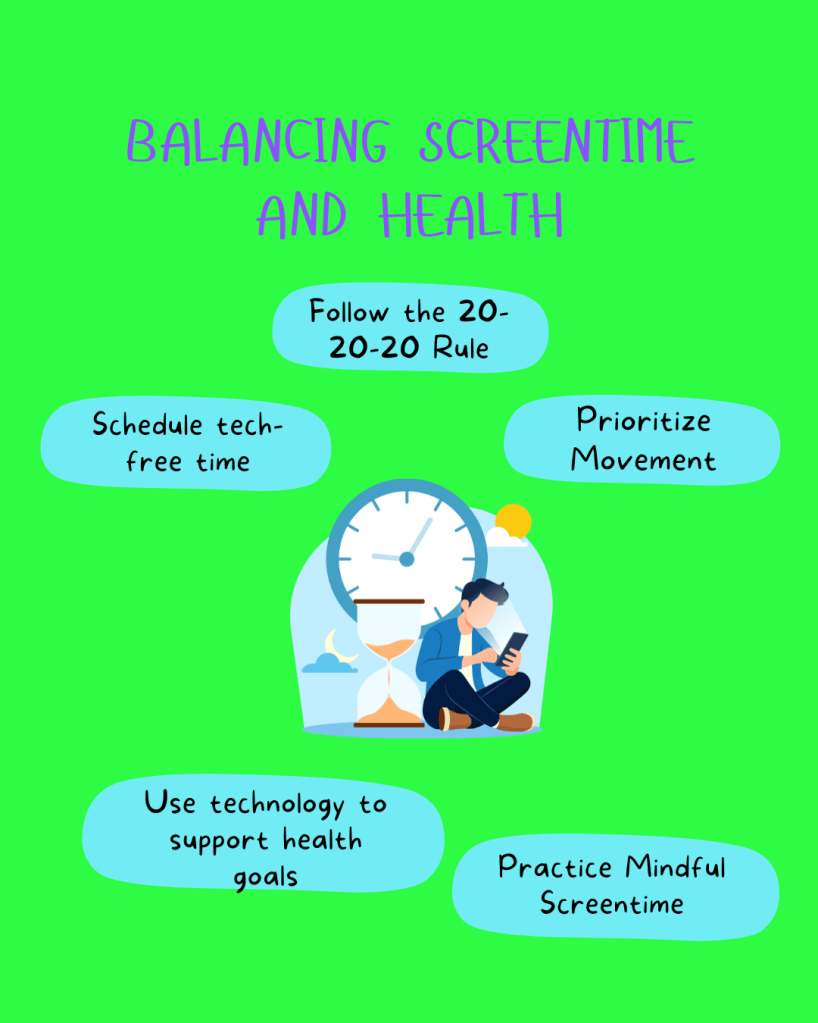
1. Follow the 20-20-20 Rule for Eye Health
Staring at a screen for long periods can strain your eyes. To combat this, try the 20-20-20 rule: Every 20 minutes, look at something 20 feet away for 20 seconds. This simple habit helps relax your eyes and prevent discomfort.
Bonus Tip: Adjust the brightness of your screen and use blue light filters, especially in the evening, to reduce eye strain.
2. Prioritize Movement Throughout the Day
It’s easy to lose track of time when engrossed in a project or your favorite show. Make it a point to stand up and move every hour. Whether it’s a quick stretch, a walk around the room, or a few jumping jacks, regular movement helps reduce stiffness and boosts circulation.
Incorporate Active Breaks:
- Do a quick desk workout during work breaks.
- Use standing desks to alternate between sitting and standing.
- Try walking meetings if possible.
3. Create Tech-Free Zones and Times
Designate certain areas of your home or times of day as tech-free zones. For example, keep devices out of the bedroom to improve sleep or set aside time during meals for screen-free family interactions.
Ideas for Tech-Free Zones/Times:
- Morning Routine: Start your day without checking emails or social media. Instead, stretch, meditate, or enjoy a mindful breakfast.
- Before Bed: Avoid screens at least 30 minutes before bedtime to help your body wind down naturally.
- Dining Areas: Make mealtimes a time to connect with others or focus on mindful eating.
4. Use Technology to Support Your Wellness Goals
Not all screen time is passive. In fact, technology can be a powerful tool for enhancing your health! Consider incorporating apps and online resources that promote wellness.
Wellness Tech Ideas:
- Fitness Apps: Track your workouts, try new routines, or join virtual fitness classes.
- Meditation Apps: Apps like Headspace or Calm guide you through mindfulness practices.
- Health Trackers: Use wearables or apps to monitor sleep, heart rate, and physical activity.
- Online Communities: Connect with like-minded people through wellness forums, social media groups, or virtual events.
5. Practice Mindful Screen Use
Be intentional about how and why you’re using your devices. Instead of mindlessly scrolling through social media, ask yourself what you hope to gain from your screen time. This practice, called digital mindfulness, can help reduce stress and improve mental clarity.
Mindful Screen Time Tips:
- Set specific goals before using devices (e.g., “I’ll spend 15 minutes reading articles on wellness”).
- Use app timers to limit time on distracting platforms.
- Curate your feed to include positive, inspiring content that aligns with your health goals.
The Bright Side: How Screen Time Can Benefit Your Health
While it’s important to be mindful of screen time, it’s equally important to recognize how technology can enhance your life. Here are a few ways screen time supports health and wellness:
- Virtual Fitness Classes: Whether it’s yoga, HIIT, or dance, online classes make fitness accessible from anywhere.
- Telehealth Services: Virtual doctor visits and mental health counseling provide convenient access to care.
- Educational Content: Podcasts, webinars, and online courses help you stay informed about health and wellness topics.
- Social Connection: Video calls, social media, and messaging apps help maintain relationships and foster a sense of community, especially when physical distance is a factor.
Final Thoughts: Embrace Technology Mindfully
At The Wellness Blossom, we believe that screen time doesn’t have to be the enemy of good health. By incorporating simple habits to balance your screen use, you can enjoy all the benefits technology offers while still prioritizing your physical and mental well-being.
Remember, it’s not about how much time you spend on screens—it’s about how you use that time. Whether you’re using a meditation app, video chatting with friends, or watching your favorite show after a long day, screens can play a positive role in your wellness journey when approached with mindfulness.
How do you balance screen time with your health goals? Share your tips in the comments below, and don’t forget to subscribe to The Wellness Blossom for more wellness inspiration!
 The Wellness Blossom
Leave a comment