Aging is a natural part of life, but that doesn’t mean slowing down is inevitable. In fact, regular exercise is one of the most powerful tools to maintain health, mobility, and independence as we age. Whether you’re entering your 50s, 60s, 70s, or beyond, incorporating physical activity into your routine can help you feel stronger, more energetic, and even happier.
At The Wellness Blossom, we’re passionate about empowering people of all ages to lead healthier, more active lives. In this blog post, we’ll explore why exercise is essential for the aging body, the best types of activities for older adults, and practical tips to stay motivated and safe on your fitness journey.
Why Exercise is Essential for Aging Bodies
As we get older, our bodies go through various changes—muscle mass decreases, bones can become more brittle, and balance may decline. However, consistent physical activity can slow or even reverse many of these effects. Here’s why staying active is so important:
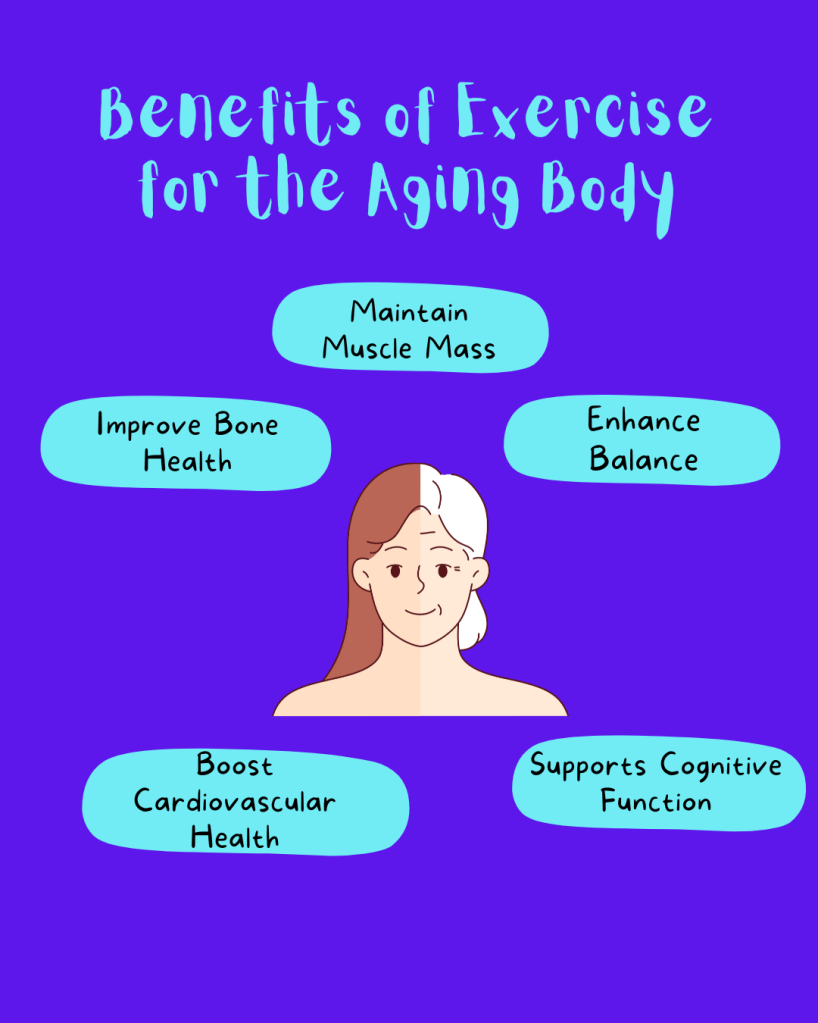
1. Maintain Muscle Mass and Strength
Starting around age 30, we naturally lose about 3-5% of muscle mass per decade if we don’t engage in regular strength training. This process, known as sarcopenia, can lead to weakness, frailty, and a loss of independence.
Solution: Incorporating resistance training, such as lifting weights or using resistance bands, can help preserve and even rebuild muscle mass, making daily activities like climbing stairs or carrying groceries easier.
2. Improve Bone Health
Aging also affects bone density, increasing the risk of osteoporosis and fractures. According to the National Osteoporosis Foundation, one in two women and one in four men over 50 will break a bone due to osteoporosis.
Solution: Weight-bearing exercises like walking, dancing, or light jogging can strengthen bones and reduce the risk of fractures.
3. Enhance Balance and Reduce Fall Risk
Falls are a leading cause of injury among older adults, with one in four Americans over 65 experiencing a fall each year. Balance exercises can improve stability and coordination, significantly reducing the risk of falls.
Solution: Activities like yoga, tai chi, and simple balance drills (like standing on one foot) can enhance stability and confidence in everyday movements.
4. Boost Cardiovascular Health
Heart disease is the leading cause of death for both men and women in the U.S. However, regular cardiovascular exercise can lower blood pressure, reduce cholesterol levels, and improve overall heart function.
Solution: Activities like brisk walking, swimming, cycling, or even gardening can improve heart health and increase endurance.
5. Support Mental Health and Cognitive Function
Exercise isn’t just good for the body—it’s great for the mind too. Physical activity increases the release of endorphins, which can improve mood and reduce symptoms of anxiety and depression. Plus, regular exercise has been linked to a lower risk of cognitive decline and diseases like Alzheimer’s.
Solution: Aim for at least 150 minutes of moderate-intensity exercise per week to reap mental health benefits.
Best Types of Exercise for Older Adults
When it comes to fitness for the aging body, a balanced approach is key. Incorporate a variety of activities to address strength, flexibility, balance, and cardiovascular health.
1. Strength Training
- What It Does: Builds and maintains muscle mass, improves bone density, and supports joint health.
- Examples: Bodyweight exercises (like squats and push-ups), resistance bands, light free weights, or machines at the gym.
- Tip: Start with 2-3 sessions per week, focusing on all major muscle groups.
2. Cardiovascular Exercise
- What It Does: Improves heart health, boosts energy levels, and supports weight management.
- Examples: Walking, swimming, cycling, dancing, or low-impact aerobics.
- Tip: Aim for 30 minutes a day, most days of the week. Even short bouts of 10 minutes can add up!
3. Flexibility and Stretching
- What It Does: Maintains range of motion in the joints, reduces stiffness, and prevents injury.
- Examples: Gentle stretching, yoga, or Pilates.
- Tip: Stretch after workouts when muscles are warm, holding each stretch for 15-30 seconds.
4. Balance Exercises
- What It Does: Enhances coordination, stability, and prevents falls.
- Examples: Tai chi, standing on one foot, heel-to-toe walking, or practicing movements with your eyes closed.
- Tip: Incorporate balance exercises daily for best results.
Tips for Exercising Safely as You Age
Safety is crucial when starting or continuing an exercise routine, especially as we age. Here are some important tips to keep in mind:
1. Consult with Your Doctor
Before beginning any new exercise program, especially if you have chronic conditions like heart disease, diabetes, or arthritis, check in with your healthcare provider to ensure your plan is safe and appropriate.
2. Start Slow and Build Gradually
If you’re new to exercise, start with light activities and gradually increase intensity and duration. Listen to your body—some soreness is normal, but sharp pain or discomfort is a sign to stop.
3. Warm Up and Cool Down
Warming up before exercise and cooling down afterward can prevent injuries and ease muscle tension. Spend 5-10 minutes doing gentle movements like marching in place or stretching.
4. Stay Hydrated
Older adults may be more prone to dehydration. Drink plenty of water before, during, and after exercise, even if you don’t feel thirsty.
5. Use Proper Equipment
If using weights, resistance bands, or machines, make sure they’re appropriate for your fitness level. Wear supportive shoes and comfortable clothing to prevent slips and falls.
Staying Motivated: Making Exercise a Lifelong Habit
Consistency is key when it comes to reaping the benefits of exercise. Here are some ways to stay motivated:
1. Find Activities You Enjoy
Whether it’s dancing, swimming, hiking, or gardening, choose activities that you look forward to. The more fun you have, the more likely you are to stick with it.
2. Exercise with Friends or Join a Class
Social interaction can make workouts more enjoyable and help you stay accountable. Look for community fitness classes, walking groups, or online workout buddies.
3. Set Realistic Goals
Start with small, achievable goals and celebrate your progress along the way. For example, aim to walk for 15 minutes a day and gradually increase as you feel stronger.
4. Track Your Progress
Keep a journal or use fitness apps to track your workouts, note how you feel, and monitor improvements in strength, balance, or flexibility.
Final Thoughts: It’s Never Too Late to Start
No matter your age or fitness level, it’s never too late to start exercising. The benefits extend far beyond physical health, improving mental well-being, independence, and overall quality of life. By incorporating a mix of strength, cardio, balance, and flexibility exercises into your routine, you can stay active, vibrant, and healthy for years to come.
At The Wellness Blossom, we’re here to support you every step of the way on your wellness journey. Remember, every movement counts—so get up, get moving, and let your health blossom!
What’s your favorite way to stay active? Share your tips in the comments below and don’t forget to subscribe for more health and wellness inspiration!
 The Wellness Blossom
Leave a comment